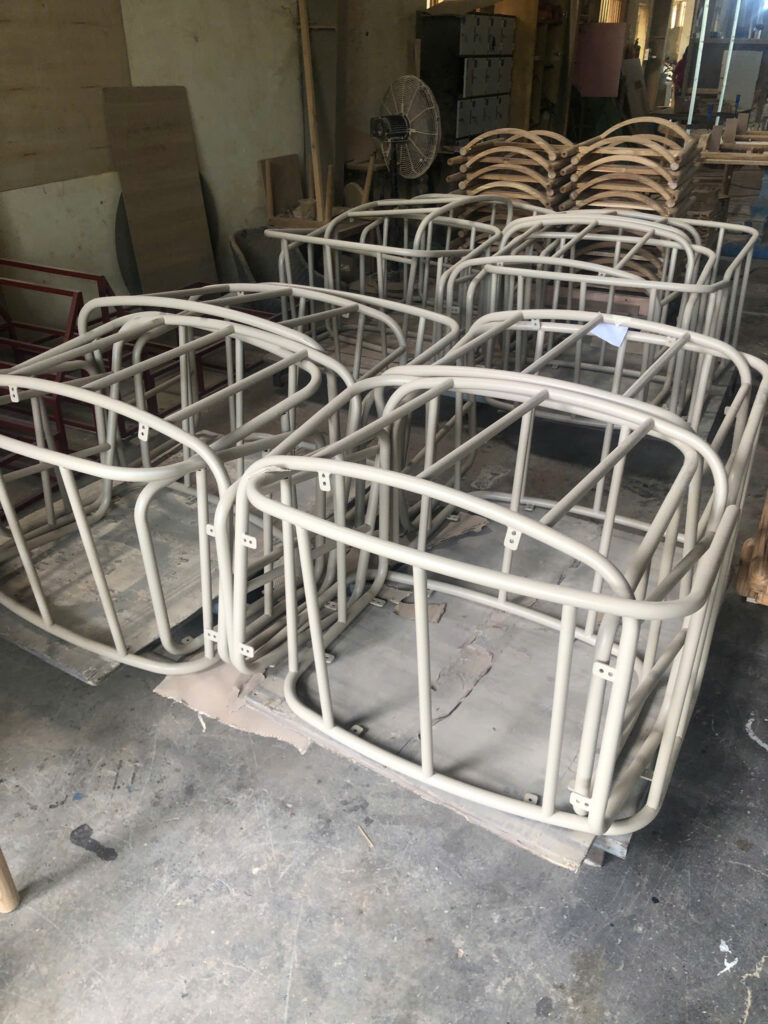
In global export, mega-factories often rely on a “closed-loop” model—controlling everything from raw materials to the final product. However, for Small and Medium Enterprises (SMEs), attempting to operate a massive, fully integrated production line can become a dangerous “cost trap” due to heavy capital investment and equipment depreciation.
Instead of trying to do it all, a modern supply chain strategy is helping agile factories scale successfully: Deep Specialization combined with an Eco-manufacturing Network.
By adopting hourly visual management methods from fast-paced industries like footwear manufacturing, an interconnected ecosystem of smaller workshops can operate like a single machine. This ensures strict compliance with both quality and lead-time commitments for global Buyers.
1. The Core Philosophy: Optimizing Costs Through Sharp Focus
For a medium-sized factory exporting wooden homeware, kitchenware, or furniture, investing thousands of dollars into heavy wood-sawing systems, high-pressure hydraulic presses, or multi-axis CNC machining centers can cripple cash flow. The lean solution? Outsourcing the heavy, initial milling and processing phases.
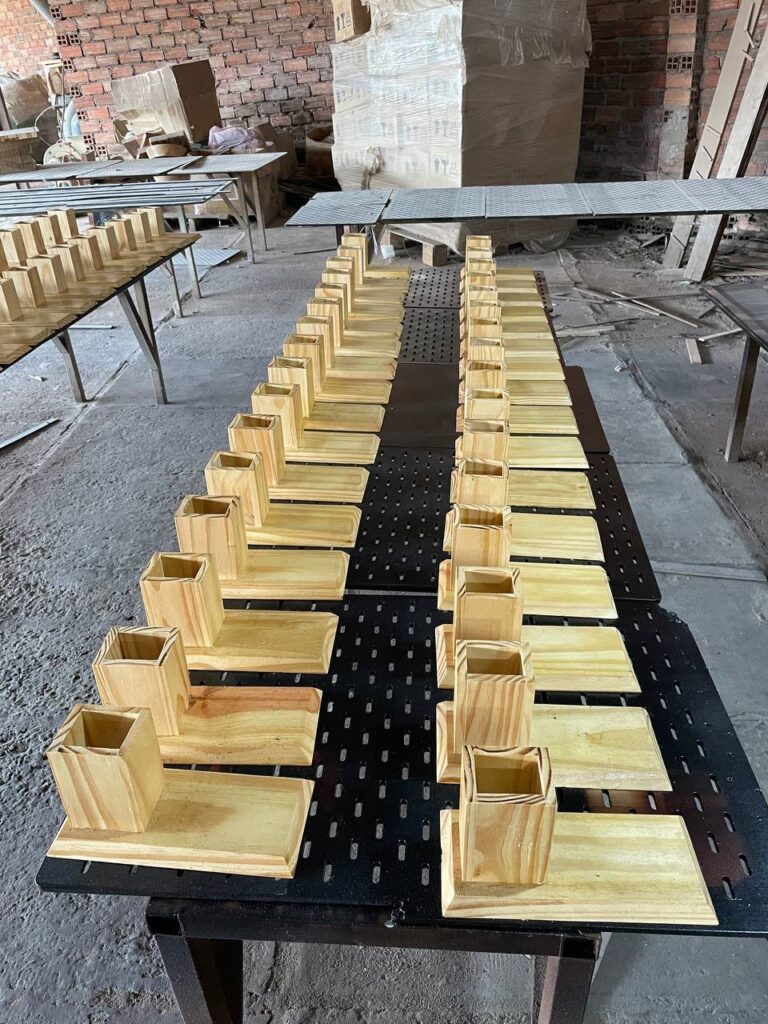
- The Satellite Factory (Milling & CNC Specialist): Focuses entirely on heavy machinery and technology. They take raw timber blocks and output precisely shaped components (such as chair legs, cutting board blanks, or structural frames) according to CAD files at a high volume.
- The Finishing Factory (Core Workshop): Concentrates all resources on the highest value-add stages: Frame assembly, fine sanding, certified surface coating/finishing, and premium upholstery.
This mindset allows smaller factories to convert rigid fixed costs (machinery investment, large raw material storage) into variable costs per unit. You only pay for component parts that have already been formed perfectly.
2. Connecting the Ecosystem with “Hourly Tracking”
The biggest risk in an outsourced manufacturing ecosystem is the mismatch in timing and technical specs between the component supplier and the finishing line. To keep this network synchronized, agile workshops implement strict, paper-based visual tracking systems:
A. Hour-by-Hour Buffer Management
Borrowed from the work-in-progress (WIP) tracking systems of export footwear lines, the finishing factory establishes fixed, daily component delivery windows with its CNC satellites (e.g., Batch 1 at 09:00, Batch 2 at 14:00).
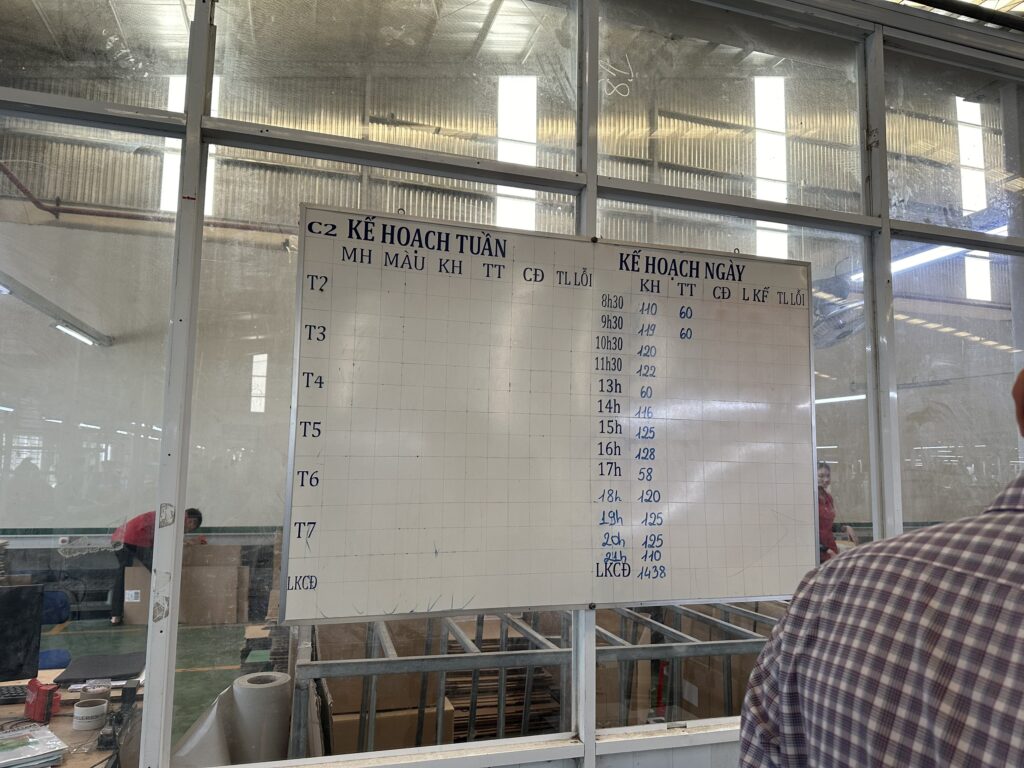
On the shop floor, production supervisors continuously update an Hourly Production Progress Board. Checking targets every 2 hours allows management to spot component delays immediately. They can dynamically reallocate workers to fine sanding or upholstery, completely eliminating idle labor time.
B. Strict Gatekeeping at Quality Control (QC) Input
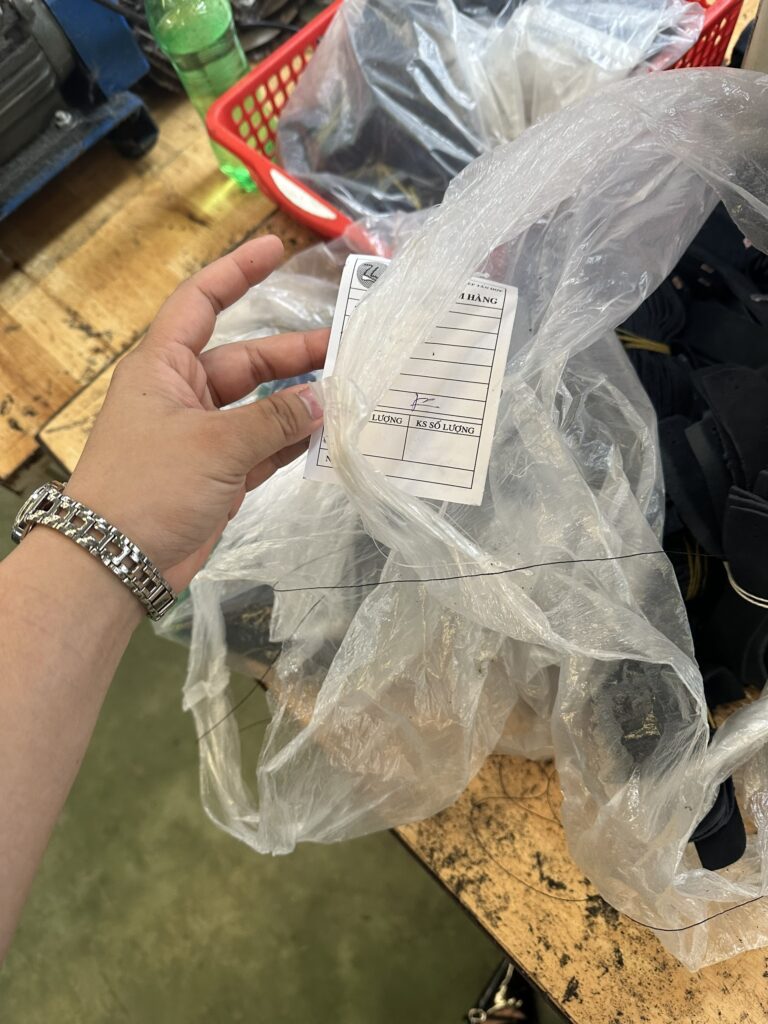
Smaller operations have zero tolerance for material waste. As soon as pallets of parts arrive from the satellite shop, the QC department affixes a WIP Component Inspection Ticket.
Every critical metric—from wood moisture content (strictly $8\% – 12\%$) to joint alignment tolerances (< 0.5 { mm})—is measured visually. If a systemic defect rate exceeds the allowed threshold (>2%), the entire pallet is red-tagged and sent back to the satellite shop immediately, preventing bad parts from clogging the assembly line downstream.
3. Why International Buyers Increasingly Prefer Flexible Ecosystems
Many assume that foreign Buyers only sign contracts with massive manufacturing. In reality, modern Buyers highly value the Agility of SME supply chain networks because:
- Rapid Customization Capability: If a Buyer decides to change a cutting board spec from Edge Grain to End Grain, you can instantly pivot to a satellite factory equipped with the exact CNC machinery needed, rather than being limited by your own in-house tech limitations.
- Mitigated Lead-Time Risks: If one CNC workshop faces an unexpected machine breakdown, the digital tool path files are immediately transferred to a backup satellite workshop in the network. This provides 100% insurance for the container’s scheduled on-board date at the port.
- Absolute Transparency: When a business presents a Daily Order Implementation Summary Report that details actual output against daily plans for every single link in the chain, Buyers gain complete peace of mind regarding your management capabilities.
The Bottom Line from Pacific Goods
At Pacific Goods, we act as the chief architect, building and managing a Deeply Specialized Production Ecosystem.
By standardizing our quality control language, tightening input QC inspections, and tracking hourly progress with satellite workshops, Pacific Goods proudly delivers flexible, cost-optimized export supply chain solutions from Vietnam. We guarantee the highest standards of quality and on-time delivery for global buyers.
Pacific Goods Vietnam Export-Import Co., Ltd
- 🔗 Website:https://pacific-goodsvn.com/
- 📧 Email: taiho@pacific-goodsvn.com
- OEM / Custom Logo Wooden Products