A few days ago, I joined an online seminar room filled with Vietnam’s exporters. We were there for a private community briefing hosted by Vietgo. Everyone in the room had one question: With geopolitical tensions in the Middle East driving ocean freight rates through the roof, how is the export market going to survive?
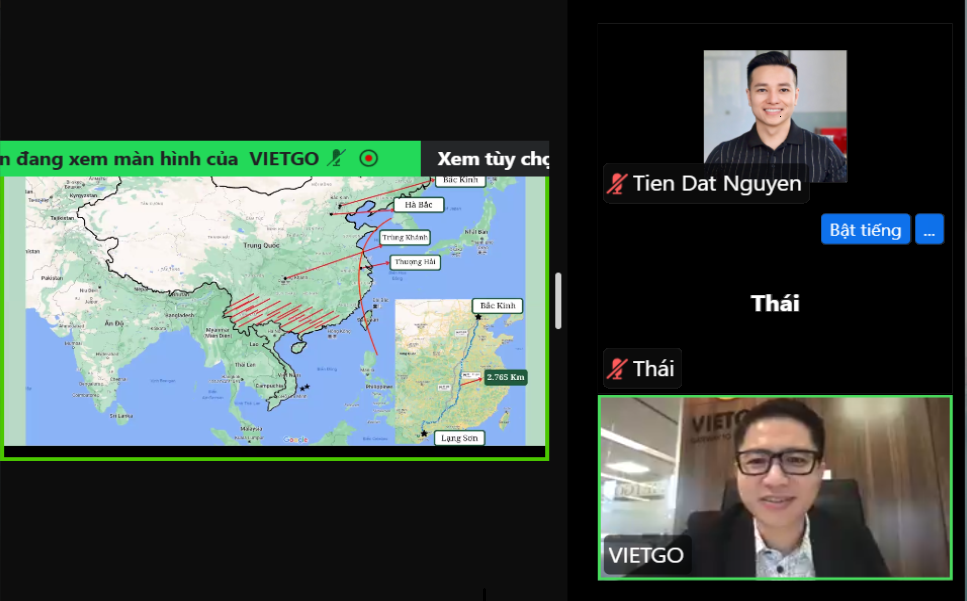
As I listened to Mr. Viet, the CEO of Vietgo, unpack the macroeconomic data from the first five months of 2026, a picture began to emerge.
When I combined his high-level insights with what we experience daily on the ground at Pacific Goods Vietnam—partnering with shipping lines, local factories—I realized something critical.
For global buyers, the shipping storm is real. But Vietnam isn’t sinking. In fact, it is proving to be the ultimate safe haven. Here is the story behind the numbers.
The Paradox of the $445 Billion Storm
In the first five months of 2026, Vietnam’s total import-export turnover hit a record-breaking $445 billion USD, tracking perfectly toward a historic $1 trillion USD annual milestone. Exports alone reached $227 billion USD—a nearly 20% jump compared to last year.
Imports surged by 30%, and a massive 94.1% of those imports were production materials, chemicals, and machinery.
The room buzzed with the realization: Factories in Vietnam aren’t slowing down because of high freight; they are aggressively stocking up. They are preparing for a massive, high-volume year-end export surge.
“Buyers Can’t Wait Forever” – Deconstructing the Freight Panic
As the seminar shifted toward the shipping crisis, the mood got heavy. Freight rates for bulky items like cement to the Middle East have shot up to $60/ton—often surpassing the actual FOB value of the cargo itself (~$40–$52/ton).
But Mr. Viet pointed out the truth about global supply chains. When freight rates spike, international buyers initially freeze for 1–2 weeks in shock. They pause their orders.
“But a freeze can only last so long,” I thought to myself, connecting his point back to our trading operations. Consumers still need apparel, construction projects still need materials, and shelves cannot stay empty. When buyers realize they have to put down money, their selection criteria strictly narrows to two things:
- Who has the most efficient maritime route to keep total costs down?
- Who can offer the lowest import tariffs to absorb the freight pain?
And that is exactly why the orders are flooding back to Vietnam.
Because Vietnam sits directly on the world’s primary international maritime highway, its baseline freight rate remains structurally lower than landlocked or secondary-route competitors when global prices spike. Pair that with Vietnam’s 18 active Free Trade Agreements (FTAs)—including the newly signed UAE FTA.
The Fleet at Our Doorstep: From Mega-Vessels to Niche Masters
Listening to the discussion in the room about logistics made me realize how mature Vietnam’s shipping ecosystem has become. We are no longer a secondary market relying on small feeder boats. The world’s logistics infrastructure has literally anchored itself here.
When we look at the logistics matrix available to us, it’s incredibly diverse:
- The Mega-Carriers: Giants like Maersk, MSC, and CMA CGM are running mega-vessels directly out of deep-sea ports like Cai Mep – Thi Vai, bypassing transshipments to hit the US and Europe directly. MSC is even doubling down with the massive Can Gio International Transshipment Port project in Ho Chi Minh City.
- The Haste Masters: For our buyers with zero time to spare, Matson Navigation now operates ultra-fast direct services to the US out of their dedicated Vietnam offices. It’s a lifesaver for urgent holiday garment runs that can’t afford standard transit times but don’t want to pay for air freight.
- The Regional Heavyweights: For supply chains bound within Asia, T.S. Lines dominates the Intra-Asia lane with frequent, cost-competitive, and highly reliable short-sea networks connecting Vietnam to China, Japan, Korea, and ASEAN.
- The Local Architect: Strategic freight forwarders like Mass Worldwide Logistics act as the essential bridge, providing flexible consolidation (LCL) and multi-modal transport solutions that help companies like ours optimize every single cubic centimeter of a container.
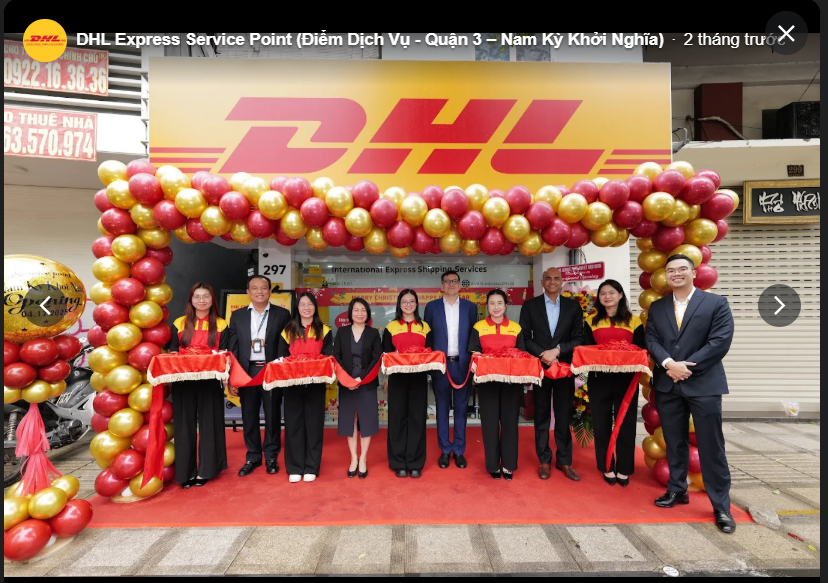
One buyer asked me what transporter they should use to send-receive sample. I highly recommend DHL.
The Real Value of a Local Partner
The biggest takeaway from that community of exporters is that in a high-freight environment, you cannot afford operational friction. You cannot afford a factory delay, a misunderstood fabric spec, or a poorly packed container when space on a vessel costs a premium.
That is why the role of a dedicated trading partner has evolved. At Pacific Goods Vietnam, we don’t just “source” products. We act as your localized project managers, your boots on the ground, and your logistics architects.
Because we understand the macro-trends shared by leaders like Mr. Viet, and because we know how to pull the right logistical levers—whether it’s booking a budget Intra-Asia run with T.S. Lines or an expedited emergency shipment to the US via Matson—we ensure your supply chain remains bulletproof.
👉 Ready to navigate your next sourcing project in Vietnam with absolute certainty?
Contact Pacific Goods Vietnam via WhatsApp today and let’s map out your optimized sourcing and logistics blueprint.
Leave a Comment